

Economies of scale in Electronics Production
...how can they sell a PC Keyboard for $15?
The PC industry typifies the economies of scale rule. The quantities in which most PC components are produced are so awesome that the final price to the user drops far below the off-the-shelf price of the individual chips, connectors and other hardware.
The large number of units produced mean that the Research and Development cost amortization is very low - an extra thousand dollars spent on design costs is not terribly important in the greater scheme of things, indeed if it can save fifty cents on production costs it is well worthwhile.
In contrast, most electronics made in Australia is quite specialist - the companies are
targeting Niche markets.
These companies, (and also Start-ups) generally manufacture in small volumes.
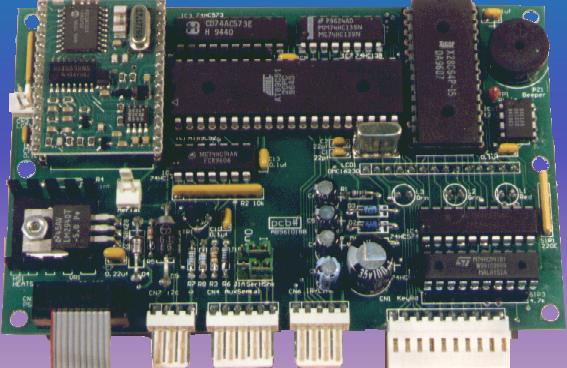 The R&D cost adds a lot more to the final price, because it must be amortised over
the smaller sales volume. That's tough, because actually the products these companies
need are generally harder to design than the mass market electronics. We do design
circuitry here in Australia where the production volume is in many thousands of units,
but the point I am trying to make is that different rules apply dependent on
the expected volume of production.
The R&D cost adds a lot more to the final price, because it must be amortised over
the smaller sales volume. That's tough, because actually the products these companies
need are generally harder to design than the mass market electronics. We do design
circuitry here in Australia where the production volume is in many thousands of units,
but the point I am trying to make is that different rules apply dependent on
the expected volume of production.
It would be difficult to push the cost of producing an ordinary 4 function pocket calculator below $50 if the production quantity was small - say 200 pcs in each run. That is assuming that there was a suitable ready made plastic case available. We can buy a calculator for $5 (or less) because of the quantity in which they are produced.
In many cases the parts that are used in high volume products are simply unavailable in small volumes, as they are custom produced for each manufacturer. Good examples would be the plastic case used in a calculator, the LCD display, and the calculator IC (integrated circuit or chip) itself. For our hypothetical pocket calculator project, we would need to use a standard microprocessor in place of the calculator, and a standard 16 x 2 LCD in place of the custom display.
The manufacturer in a high volume market can also reduce the size of his product substantially, through spending a little more on design, the use of custom parts, and sometimes through more sophisticated manufacturing techniques. A good example is the chip-on-board construction used in a calculator, where the IC dice are attached directly to the PCB, bondwires are connected, and then the die is covered in a black epoxy blob for environmental protection.
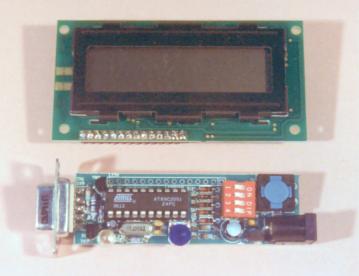
Companies selling into existing Niche Markets can usually estimate how many units they will sell to their customers, atleast to the order of magnitude required to estimate the amortisation of production costs.
A realistic development path for a startup company will usually involve designing a low volume high price version of their product first, and then moving to high volume designs as the market matures. This is only possible where the economic demand for the product is "elastic" - in other words there is some demand even when the price is high. Fortunately, high technology products usually exhibit elastic demand - for instance the market for computer equipment is very elastic - the first computers cost millions in todays money, and were significantly less capable.
Unfortunately, the market for consumer products tends to be rather less elastic - when the price goes above a certain point, demand drops off dramatically. If we graphed the demand against the price for most consumer products, we would see a definite "knee" in the curve. Interestingly, as consumers in a country become more wealthy, often the increased spending power of the population moves the knee within reach - suddenly it may seem everyone in a country starts buying flat screen colour TVs, for instance.
This knee can make it very difficult for a startup company to produce a consumer item. There really is no easy answer - the economic realities are stacked against any but a company with an established market producing most types of new consumer product, because of inelastic demand. This is really not so bad - there are plenty of niche market opportunities out there for the startups!
I don't measure a man's success by how high he climbs but how high he bounces when he hits bottom. -- General Patton
- Contact Us
- Enquiry Form
- Sitemap
- The PCB design method
- About Circuit diagrams
- About PCB layout
- About Firmware design
- Spec'ing your job
- Our design service
- Example Projects Library
- Mechatronic control unit
- Garbage truck compactor
- RS232-RS485 convert (2006)
- Tone generator test project
- RS485 fire panel int.
- Front panel switches( A/D)
- Serial to IRDA
- Danfoss loop tester
- RAN Multilayer trainer
- Programmable Oscillator
- Pressure sense PCB
- Nursecall overdoor light V2
- Design step-by-step
- Circuit diagrams
- PCB Layout
- PCB Etching
- Prototyping
- Firmware design
- Documentation
- Manufacturing
- Economies of scale
- Test Procedures
- ECOs - changes
- EMI & ESD in design
- FR4 and fire resistance
- Project Specifications
- Specification Intro.
- Writing a Spec
- Tech Ingredients
- Example Specs (older)
- Selecting a designer
- R&D Economics
- Design Inspiration
- Autotrax Utitilities
- Autotrax links
- Our PicoBus IO Std
- RS232 connectors
- Our RS485 converter
- P89LPC932
- Our Program header
- How to use a Multimeter
- Our Site index
- Offsite Links (15000+)
- Google search
- Contact
©2013 AirBorn - Last updated 01 May 2013